

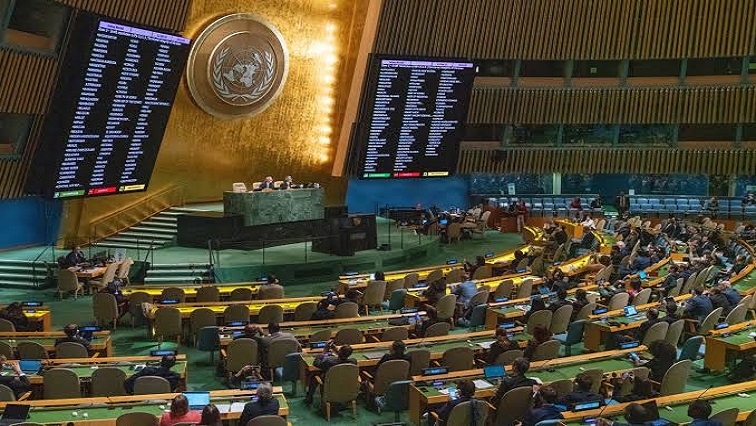
UN Day, observed annually on October 24, commemorates the entry into force of the UN Charter in 1945.
The UN formally came into existence after the Charter was ratified by a majority of signatories, including the five permanent members of the Security Council.
The anniversary has been observed since 1948 and highlights the UN’s work in advancing peace, development and human rights.
The organisation’s responsibilities include supporting diplomatic efforts to resolve disputes, combating poverty and hunger and delivering humanitarian assistance to people affected by conflict, disasters and displacement.
In the final UN Day message of António Guterres’s tenure as Secretary-General, Guterres said international cooperation remained essential to addressing shared global challenges. “Humanity’s future depends on our ability to work together to advance peace, development and human rights,” Guterres said.
Guterres highlighted continuing conflict, the climate crisis, increasing inequality and technological developments advancing faster than international governance systems. “The UN is an essential part of the fabric of our world,” Guterres said. “And it’s needed more than ever.”
The creation of the UN followed international efforts to respond to the destruction caused by the Second World War.
The UN Relief and Rehabilitation Administration was established in November 1943, two years before the UN formally came into existence.
The agency responded to hunger, disease, mass displacement and widespread infrastructure destruction while helping millions of people rebuild lives following the war.
The organisation also became an early model of international humanitarian cooperation, demonstrating how countries could pool resources and expertise in response to crises affecting several regions.
Eight decades later, the UN continues to provide a platform for 193 Member States to address international peace and security, sustainable development, humanitarian emergencies and human rights.
However, growing geopolitical divisions, continuing conflict and pressure on humanitarian financing have raised questions about the organisation’s ability to deliver on the founding principles contained in the Charter.
UN Day provides Member States with an opportunity to reaffirm commitments to multilateralism and collective action.
Guterres said the organisation remained indispensable as countries faced challenges that could not be resolved by individual governments acting alone.
–UN/ChannelAfrica–





