
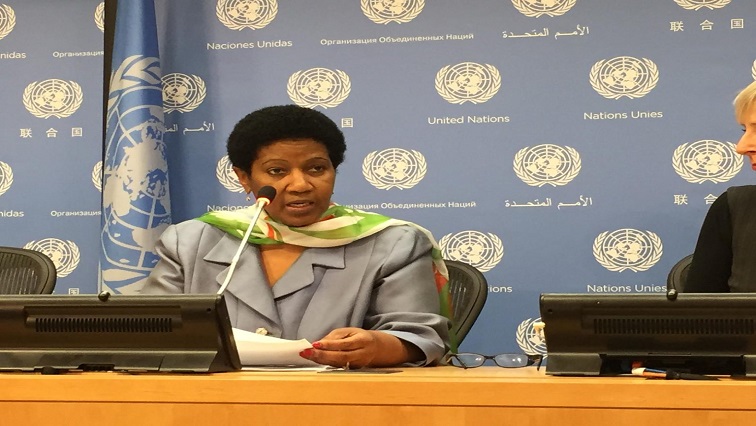
A moment of silence has been observed at the United Nations (UN) in New York to honour the memory and legacy of former South Africa’s (SA) Deputy President Dr. Phumzile Mlambo-Ngcuka.
The UN is marking the International Day for the Elimination of Violence Against Women and began their official commemoration with emotional tributes to the late Executive Director of UN Women.
Deputy Executive Director of UN Women Nyaradzayi Gumbonzvanda says, “She was the heartbeat of this organisation in its infancy, a leader, an activist, a champion in the front to many. She passed away on 20th November 2026 before she came to us. She was part of South Africa’s struggle for liberation and for racial justice. She then rose to become the deputy president of the nation, the first woman to hold that office.”
“On behalf of our executive director doctor, my fellow deputy Executive Director Dr Sima Bahous in the entire UN women family, I extend our deepest condolences to the family, to the people of South Africa and to the women and girls everywhere whose lives see changed, including mine,” Gumbonzvanda adds.
Deputy Secretary-General of the United Nations Amina Mohammed, fighting back tears, said Dr Mlambo-Ngucka brought the same determination with which she fought apartheid in South Africa to the fight for women’s equality through her work at the United Nations.
“When she came to UN Women, she brought that same determination to open doors for others. She drew men and boys into the fight for equality through her, she championed a new generation of African women leaders through the African Women Leaders Network and made sure young activists had a place alongside heads of state through Generation Equality. She also knew when the world needed to be woken up to the realities that women faced when COVID-19 closed our doors and violence against women rose behind them she gave it a name the Shadow Pandemic.
But I know that for many of you in this room, your memories of Phumzile will not just be her incredible legacy and achievements, but her humanity, her warmth as a person, her smile, how well she could articulate what so many women were living through because she had lived through much of it herself. How generous she was with her time, her counsel. In many ways, she never stopped being a teacher to all of us,” Mohammed adds.
—SABC—