


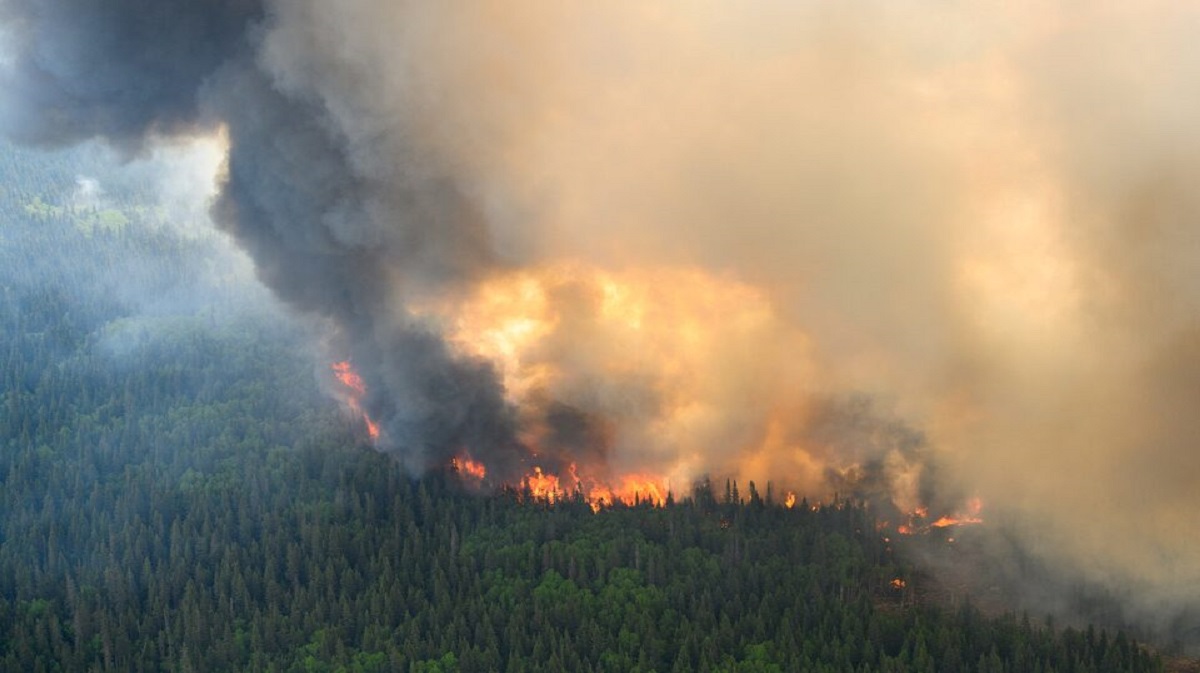
This underscores the growing intersection between poverty and the climate crisis.
This is according to a joint report released on Friday by the United Nations (UN) Development Programme (UNDP) and Oxford University, ahead of next month’s COP30 climate summit in Brazil.
The study is the first to overlay climate hazard data with multidimensional poverty data, revealing how environmental shocks are reshaping poverty globally.
“Poverty is no longer a standalone socio-economic issue. Instead, poverty is compounded by and interlinked with the increasingly dramatic effects of the climate emergency,” said UNDP Acting Administrator Haoliang Xu.
According to the report, 1.1 billion people worldwide are living in multidimensional poverty, which spans deprivations in health, education and living standards, and 887 million of them are directly exposed to at least one climate hazard.
High temperatures, air pollution, drought and flooding are the most common threats, with many communities facing multiple hazards simultaneously. The data shows that 651 million poor people are exposed to two or more risks, while 309 million face up to four.
South Asia and sub-Saharan Africa are the hardest-hit regions, accounting for 380 million and 344 million poor people, respectively, who live in areas affected by climate extremes. In South Asia, virtually all poor people, 99% experience at least one climate hazard.
Sabina Alkire, Director of the Oxford Poverty and Human Development Initiative, said middle-income countries have become a “hidden epicentre” of global poverty, home to nearly two-thirds of the world’s poor. Of these, more than 470 million face two or more climate risks.
The report warns that countries with higher levels of multidimensional poverty today are likely to face the greatest temperature increases by the end of the century, deepening existing inequalities.
Xu urged urgent, collective action, noting that solutions must be holistic and adequately funded. “As we look to COP30, we carry forward a message of hope and cooperation. We know what works and can continue to support the populations and countries in need,” he said.
–UN/ChannelAfrica–


