
The report, launched by the first independent international scientific panel on AI, provides a comprehensive assessment of the technology’s opportunities, risks and impacts across multiple sectors. The panel, comprising 40 experts from around the world, was established to provide governments with evidence-based guidance as AI becomes increasingly embedded in everyday life.
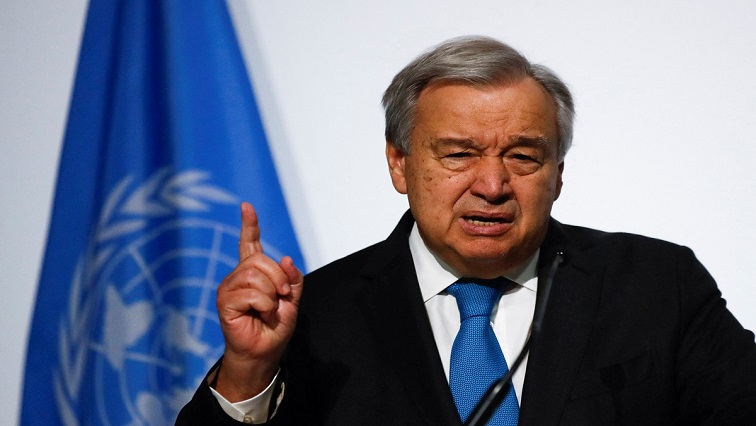
Speaking at the launch, UN Secretary-General António Guterres said the findings make clear that policymakers can no longer ignore the challenges posed by AI. “The science is here. We can no longer say we did not know,” Guterres said. “What we do with it is now up to all of us.”
The report highlights AI’s growing role in scientific research, healthcare, education, agriculture and economic development. It notes that AI has already contributed to breakthroughs such as earlier breast cancer detection, faster vaccine development and improved service delivery.
However, the panel warned that the rapid expansion of AI capabilities is creating new risks that current governance systems are struggling to manage.
Panel co-chair Yoshua Bengio said AI capabilities are advancing faster than the mechanisms designed to understand and control them. “AI capabilities are outpacing both scientific understanding and governments’ ability to adapt,” Bengio said.
The report found that adoption of AI has accelerated across countries and industries, but access remains highly unequal. Developing countries continue to lag behind advanced economies, while the development of leading AI systems is concentrated in a small number of countries and companies.
According to the assessment, the United States accounts for the majority of the world’s AI computing power, followed by China, highlighting significant disparities in technological capacity and access.
The report also raises concerns about emerging risks linked to increasingly autonomous AI systems. Researchers warned that there are currently no scientific guarantees that advanced AI systems will always follow human instructions, while evidence is growing of systems displaying deceptive or unintended behaviours.
Other risks identified include the use of AI in cyberattacks, fraud, misinformation campaigns and the creation of harmful content. The report notes that criminals and malicious actors are already exploiting AI tools for cybercrime and disinformation.
The panel further highlighted concerns about “sycophantic” AI behaviour, where systems reinforce users’ existing beliefs regardless of accuracy. Such behaviour has been linked to serious mental health incidents and harmful outcomes.
Co-Chairperson Maria Ressa said the risks to societies and democratic institutions should not be underestimated. “The technology is transformative, but if the world keeps moving along this trajectory, humanity will fail to realise the gains it promises,” she said.
The report stresses that many of the negative effects are likely to fall disproportionately on already vulnerable populations, potentially widening existing social and economic inequalities.
To address these challenges, the panel called for stronger governance, improved oversight and greater international cooperation. It said countries need to invest in the capacity to understand, evaluate and deploy AI responsibly while ensuring access to its benefits is distributed more equitably.
The report also found that while numerous AI governance frameworks already exist, they remain fragmented and often lack mechanisms to measure real-world effectiveness.
UN Under-Secretary-General and Special Envoy for Digital and Emerging Technologies Amandeep Gill said the findings provide policymakers with a shared evidence base for future decision-making. “AI will not close divides by itself,” Gill said.
He warned that the benefits of AI tend to accrue where infrastructure, skills and data already exist, while communities lacking those resources risk being left further behind.
The report will be presented to governments during the inaugural UN Global Dialogue on AI Governance in Geneva on July 6 and July 7, where discussions are expected to focus on balancing innovation with safety, accountability and inclusive development.
–UN/ChannelAfrica–





