

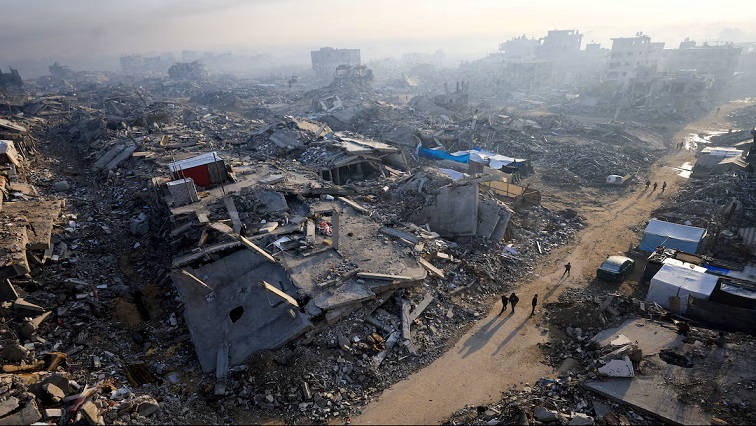
Years of conflict have left Gaza covered with an estimated 57 million tonnes of rubble, with roughly three-quarters of buildings damaged or destroyed. The challenge now is how to clear, process, and reuse that material while rebuilding essential infrastructure.
One proposal under consideration involves recycling rubble to reclaim land along the Mediterranean coast. The idea aims to address two problems at once: managing debris and reducing reliance on imported construction materials. However, UN Environment Programme analysis suggests the scale of available debris falls far short of what is required for large‑scale land reclamation.
Current planning estimates indicate that major coastal expansion projects would need around 200 million cubic metres of material. Even if more than half of Gaza’s debris were recycled, it would provide only a fraction of that volume, limiting the feasibility of such projects.
Beyond volume constraints, the composition of the rubble presents a major obstacle. Gaza’s debris is a complex mix of concrete, steel, household materials, hazardous substances, and, in some cases, human remains. UN experts warn that extensive sorting is essential before any reuse, particularly to remove asbestos, chemical waste, and unexploded ordnance.
To support recovery, international teams are working to establish recycling centres capable of turning rubble into construction aggregates. These facilities could support rebuilding efforts and smaller-scale coastal protection works, such as reinforcing barriers or raising low‑lying land.
Past reconstruction efforts offer mixed lessons. Beirut used rubble to reclaim coastal land after Lebanon’s civil war, but the approach raised environmental concerns. Japan’s post‑2011 reconstruction showed that large-scale recycling can succeed, provided strict environmental controls and advanced sorting systems are in place.
The UN assessment stresses that any use of debris, particularly in marine environments, must meet environmental standards and undergo impact assessments. While recycling could play a role in reconstruction, the report concludes that immediate priorities remain housing, infrastructure, and essential services, with long-term development decisions requiring careful planning to avoid new risks.
–UN/ChannelAfrica–


