


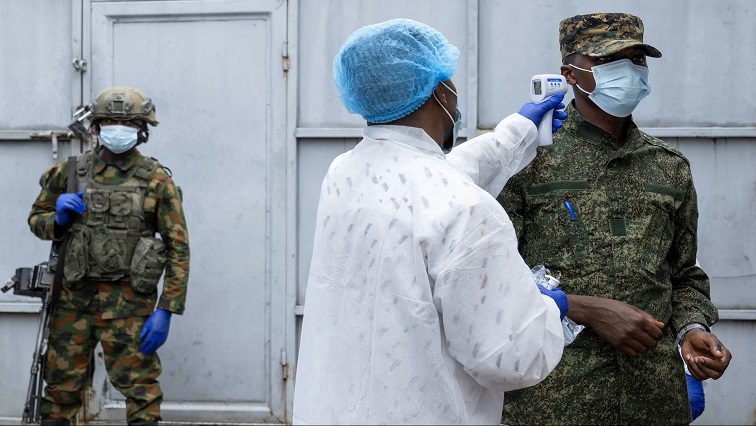
The warning comes as the number of infections surpassed 5 000 and the death toll climbed to 2 516 since the outbreak was declared on May 15.
UN Senior Ebola Coordinator Julien Harneis said response efforts are facing a critical funding shortfall. “We’re only covered for the next weeks, and very soon funding will run out,” Harneis said.
“Every delay in funding and implementation makes this epidemic more deadly, more difficult to stop and more expensive. So, we need that international support immediately.”
According to the latest health authority figures, 5 290 people have been infected, while 1 152 people have recovered. Nearly 840 people remain in isolation or are receiving treatment in health facilities.
The outbreak’s fatality rate currently stands at 47.6%.
Speaking from Bunia in Ituri province, Harneis said the epidemic continues to spread faster than response efforts. “The epidemic is spreading to an area that is bigger than France,” Harneis said.
“And the outbreak is growing faster and wider than the Ebola response.”
Harneis warned that transmission is accelerating, noting that half of all recorded deaths have occurred during the past 20 days.
The outbreak has also taken a heavy toll on frontline health workers.
According to Harneis, 160 healthcare workers have contracted Ebola since May and 43 have died. “And then when we do respond, apart from the threat from the virus, healthcare workers and frontline workers have been attacked by youths, ambulances have been burned and stoned, and the healthcare facilities have been attacked,” Harneis said.
Response efforts have also been complicated by poor infrastructure and insecurity across the six affected eastern provinces of Ituri, North Kivu, South Kivu, Haut-Uélé, Tshopo and Bas-Uélé.
Harneis described the operating environment as extremely difficult. “Last week, I was trying to get into an Ebola hotspot, and it took three hours to drive 60 kilometres,” Harneis said.
The UN said weak banking services in affected areas have created additional obstacles, including delays in paying frontline workers.
Despite the challenges, UN agencies including the World Health Organisation, World Food Programme, UN Children’s Fund and the International Organisation for Migration continue supporting the response alongside DRC authorities and humanitarian partners.
Harneis said recent cuts to international aid have reduced humanitarian capacity by more than 30%, even though the United States has provided approximately $80 million to the DRC government to strengthen treatment facilities, safe burial programmes and other response measures. “It’s a disease, it’s an invisible threat which comes into your community, and suddenly people start falling sick around you and your loved ones die,” Harneis said.
“And that generates a lot of fear in any community.”
–UN/ChannelAfrica–


