


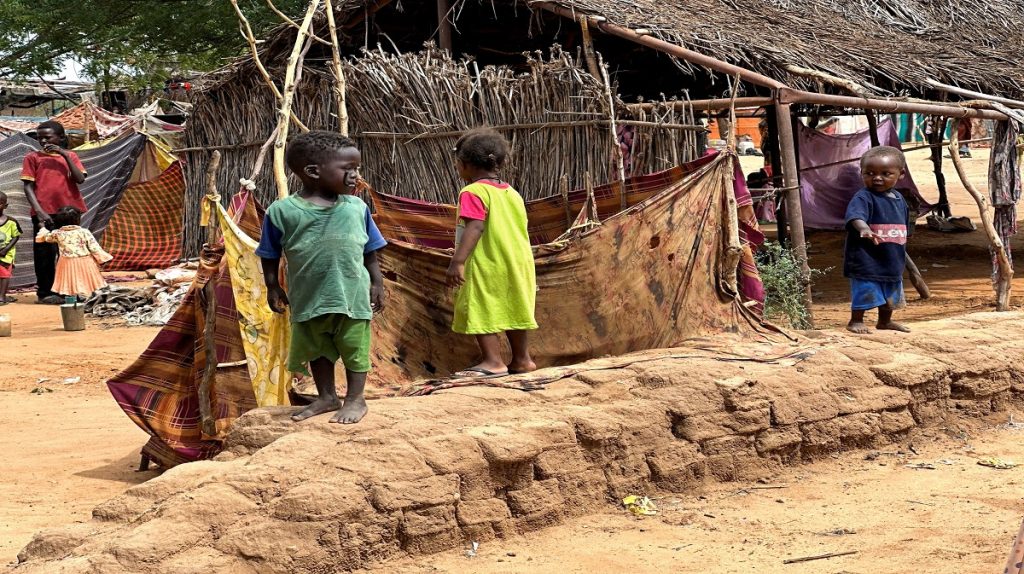
Senior officials described the city as having “descended into an even darker hell,” with tens of thousands of civilians fleeing on foot amid reports of mass executions, rape, and starvation.
Briefing ambassadors at the UN Security Council on Thursday, Tom Fletcher, the UN’s top relief official, said: “Women and girls are being raped, people are being mutilated and killed, with utter impunity. We cannot hear the screams, but, as we sit here today, the horror is continuing.”
RSF fighters reportedly went house to house after overrunning the Sudanese Armed Forces’ (SAF) last major stronghold in Darfur. Credible reports suggest widespread executions as civilians attempted to escape, including nearly 500 patients and companions killed at Saudi Maternity Hospital, one of several health facilities targeted in the fighting.
“Tens of thousands of terrified, starving civilians have fled or are on the move,” Fletcher added.
“Those able to flee, the vast majority women, children, and the elderly, face extortion, rape and violence on the perilous journey.”
The UN Assistant Secretary-General for Africa, Martha Pobee, described the fall of El Fasher as “a significant shift in the security dynamics,” warning that the implications for Sudan and the wider region are profound.
Fighting has intensified in Kordofan, where RSF recently captured the strategic town of Bara. Drone strikes by both RSF and SAF are now reported across Blue Nile, South Kordofan, West Darfur, and Khartoum, broadening the conflict’s territorial scope.
“The risk of mass atrocities, ethnically targeted violence and further violations of international humanitarian law, including sexual violence, remains alarmingly high,” Pobee told the Council. She confirmed that at least 50 civilians were killed in Bara in recent days, including five Sudanese Red Crescent volunteers.
UN human rights monitors have documented mass killings, summary executions, and ethnically motivated reprisals in both El Fasher and Bara. Fletcher noted that the current crisis echoes the atrocities that devastated Darfur twenty years ago, yet the global response today is “one of resignation” rather than urgent action.
“The Sudan crisis is, at its core, a failure of protection, and our responsibility to uphold international law,” Fletcher said. “Atrocities are committed with unashamed expectation of impunity… the world has failed an entire generation.”
–UN/ChannelAfrica–


