

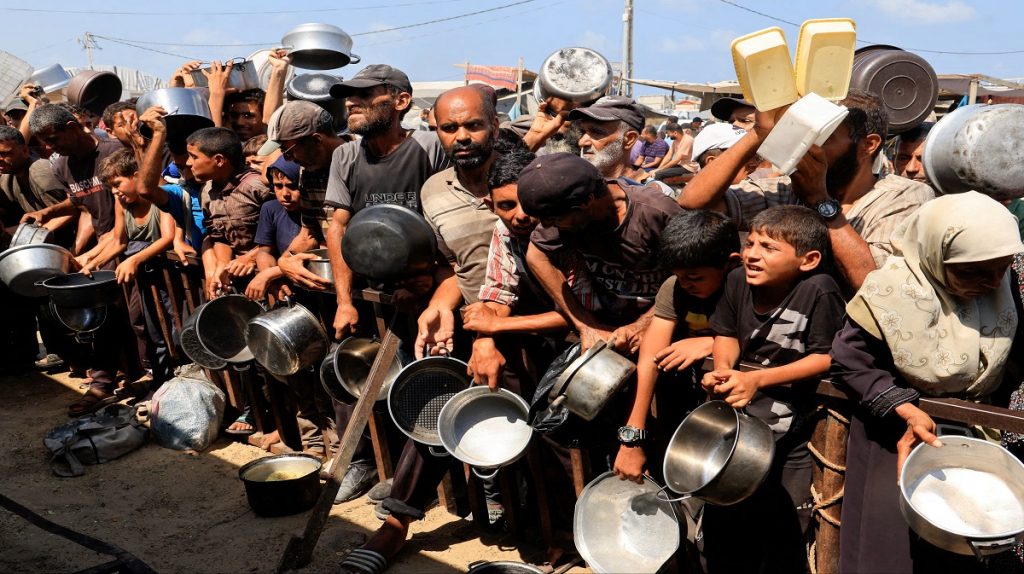
Alami, who serves as Adolescent and Youth Programme Officer at UN Population Fund (UNFPA), outlined a crisis of staggering scale. “We have more than one million children in Gaza who need mental health and psychosocial support services,” she said.
The statistics are stark. According to UNFPA data, 96% of children in Gaza report feeling that death is imminent, reflecting the extreme fear and trauma they endure each day. Among adolescents and youth, approximately 61% are experiencing post‑traumatic stress disorder, 38% depression and 41%anxiety. “Alarmingly, one in five adults contemplates suicide almost daily,” Alami added.
Before the current escalation, child marriage in Gaza had steadily declined, dropping from 25.5% in 2009 to 11% in 2022. Now, the trend has sharply reversed. A recent UNFPA study found that 71% of respondents reported increasing pressure to marry girls under 18. Emergency courts issued more than 400 marriage licences for girls aged 14 to 16 in a short monitoring period, but the true number is likely far higher.
Alami said families often resort to child marriage as a survival mechanism amid displacement, poverty and insecurity. Yet the consequences for girls are devastating. In 2025, around 10 per cent of newly registered pregnancies in Gaza were among adolescents. With only 15 per cent of health facilities still able to provide obstetric and neonatal care, risks of complications for young mothers and their babies are rising sharply.
Child marriage also exposes girls to violence. UNFPA estimates that 63 per cent of those married young experience physical, psychological or sexual abuse. More than 100 suicides or attempted suicides have been documented among survivors of violence.
While Gaza remains the epicentre, conditions in the West Bank are deteriorating as military operations, raids and settler violence escalate. Schools have closed due to movement restrictions, and children live with chronic anxiety. Some young people are now considering leaving Palestine entirely.
UNFPA has reopened or supported more than 35 safe spaces for women and girls across Palestine, distributed over 120 000 dignity and hygiene kits and expanded psychosocial services through youth centres and helplines. However, these efforts face severe constraints due to displacement, limited resources and harsh conditions. “Many families prioritise survival over mental health,” Alami said. “Integrated support is essential.
–UN/ChannelAfrica–


