

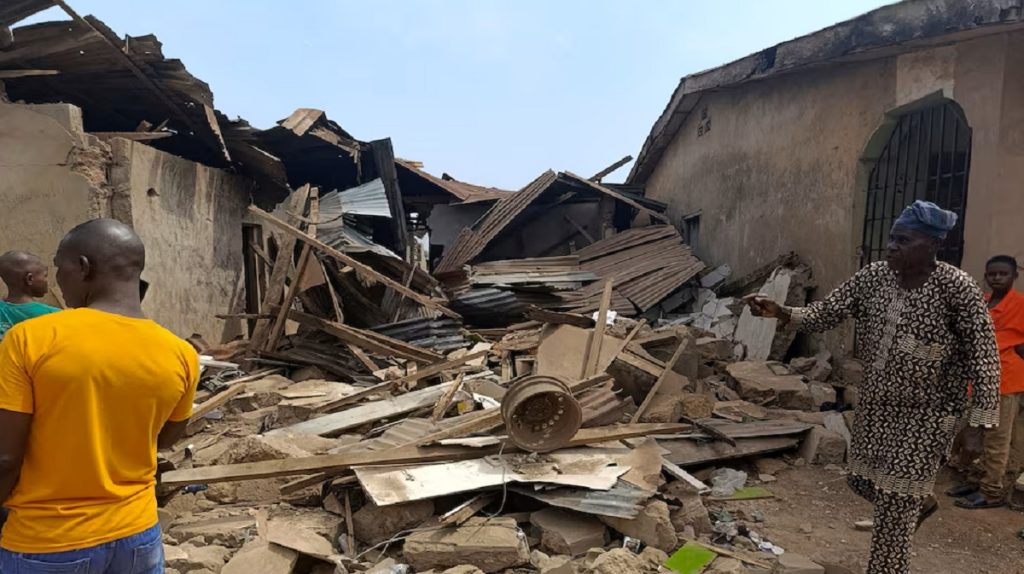
The strikes thrust Nigeria’s long‑running sectarian violence back into the international spotlight and reignited claims that a “Christian genocide” is unfolding in Africa’s most populous nation.
But according to the UN’s top humanitarian official in Nigeria, the current crisis cannot be reduced to a single narrative. Mohamed Malik Fall, the UN Resident and Humanitarian Co-ordinator, warned that the country’s deepening insecurity affects communities of all faiths and regions and now ranks among Africa’s most severe, yet overlooked, humanitarian emergencies.
“Security remains one of Nigeria’s major challenges,” he said. “You can no longer associate it with a single region. It is almost everywhere.” Nigeria’s crisis traces back to 2009, when the extremist group Boko Haram launched an insurgency in the north‑east. The violence later expanded with the emergence of splinter factions, including Islamic State West Africa Province.
Nearly two decades later, the impact is staggering. More than two million people remain displaced in the north‑east alone. “An entire generation has grown up in displacement camps, knowing nothing else,” Fall noted.
Beyond the human toll, more than 40 000 deaths, thousands of schools and clinics destroyed, and vast tracts of farmland abandoned, the economic and social consequences have been devastating.
“People have been cut off from all economic activity,” Fall said. “They are deprived of the ability to live from their work and preserve their dignity.” What began as a contained insurgency in the north‑east has evolved into a nationwide security crisis. In the north‑west, armed groups involved in mass kidnappings and extortion have driven around one million people from their homes.
In the central belt, clashes between farmers and herders, worsened by climate change and land degradation, have displaced countless more. In the south, separatist movements and attacks linked to the oil industry continue to destabilise communities. In total, Nigeria now has approximately 3.5 million internally displaced people, nearly 10% of all displacement across Africa.
A series of high‑profile attacks has revived global concern about Christian communities in Nigeria. In January, more than 160 worshippers were abducted during Sunday services in Kaduna State. Days earlier, villages in the north‑west were attacked and students near a Catholic school in Papiri were targeted. These incidents echo the 2014 abduction of 276 Chibok schoolgirls, most of them Christian, by Boko Haram, a moment that once galvanised global outrage.
Amid the latest violence, the US justified its Christmas Day airstrikes on the basis of protecting Christian populations from Islamist militants. Several US officials have since claimed that a “Christian genocide” is underway.
The UN, however, warns that such claims risk distorting the reality on the ground. “Attributing this violence to the targeted persecution of a religious group, I would not take that step,” Fall said. “The vast majority of the more than 40 000 people killed in the insurgency are Muslims. They were attacked and killed in mosques.”
He cited a Christmas Eve attack in Maiduguri that struck an area “between a mosque and a market,” killing Muslim worshippers as they left prayers. “Insecurity affects everyone, without distinction of religion or ethnicity,” he stressed, warning that oversimplified narratives risk deepening divisions rather than addressing the complex drivers of violence.
–UN/ChannelAfrica–


