


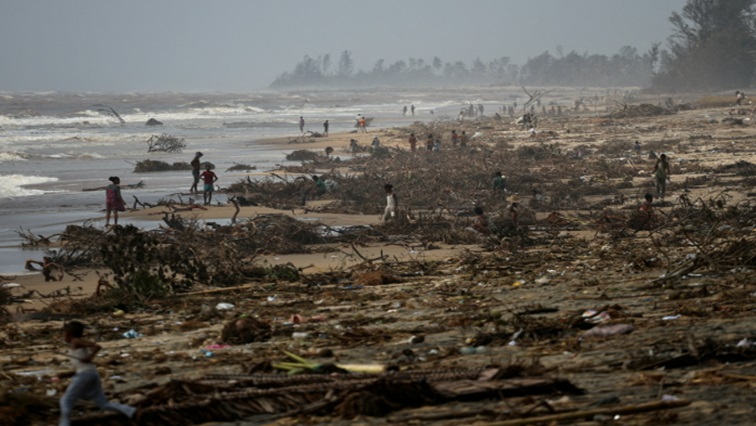
United Nations Children’s Fund (UNICEF) has urged a rapid scale‑up of humanitarian assistance in Madagascar on Sunday as the death toll from Cyclone Gezani climbs above 60, with vast areas still struggling to recover from the storm’s powerful winds and flooding.
In Toamasina, drone footage released by UNICEF and filmed last week on February 11, shows entire neighbourhoods flattened, homes swept away along riverbanks, and trees uprooted or toppled across roads. Residents were seen wading through floodwaters, cycling through submerged streets and carrying sheets of corrugated iron to rebuild makeshift shelters.
The World Meteorological Organisation said intense tropical cyclone Gezani made landfall in eastern Madagascar on February 10, with winds of about 180 km per hour and gusts peaking at 230 kilometre per hour. The port of Toamasina was worst hit, with severe damage to buildings and infrastructure.
It also says nearly 270 000 people have been affected and 16 000 displaced and that Gezani followed hard on the heels of tropical cyclone Fytia at the end of January.
UNICEF’s Chief of Emergency in Madagascar, Gillian Walker, said the visible destruction only hints at the depth of the crisis.
“The damage is quite significant because the winds were up to almost 250 kilometres per hour,” Walker said.
Across Toamasina, roads remain littered with fallen trees, mangled roofs and debris from collapsed structures. Schools have been destroyed, power remains limited, and many communities outside the main city are still cut off.
Walker also said that official figures put the death toll from Gezani at 60 but the real figure is hard to tell because of the subsequent impact of the cyclone ranging from reduced access to health care, clean water and shelters.
With more than 470 000 people affected and tens of thousands displaced, authorities and aid agencies warn the humanitarian response must accelerate in the coming days.
–Reuters–


