


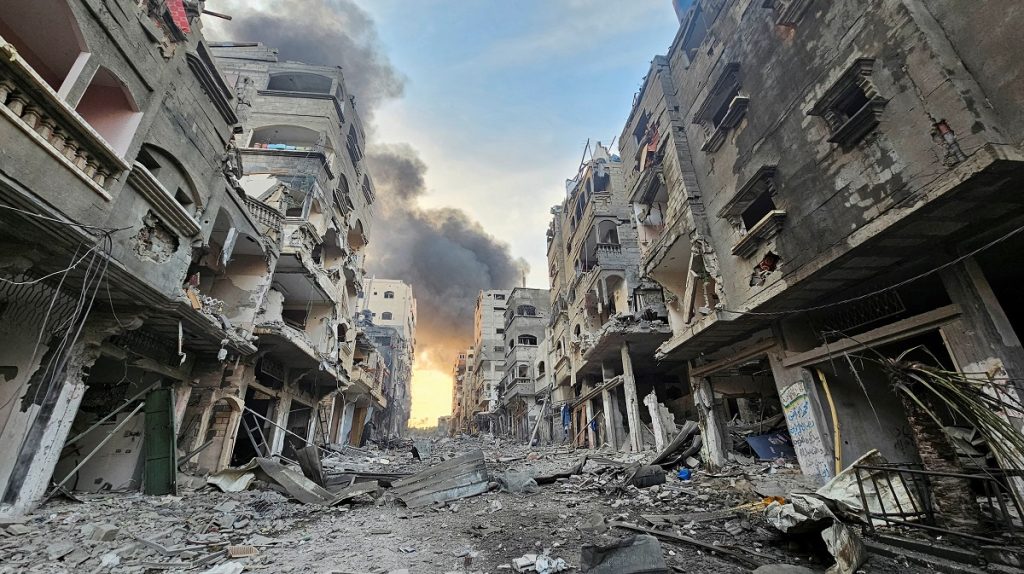
The UN Children’s Fund, UNICEF, highlighted the case of six-year-old twins, Yahya and Nabeela, who were critically injured by an unexploded remnant of war in northern Gaza. The twins are now receiving mental health support and tarpaulins to help protect them from the cold as winter approaches.
Although there has been no rain for several days, families living in tents are still struggling after sudden and heavy downpours over the weekend. According to UNICEF’s Tess Ingram, the flooding has left many in despair. She described meeting Wafa, a displaced mother of five whose tent had been inundated with water.
“She said there were times that she wished that she was in the house in her family home with the children when it was bombed,” Ingram explained. Wafa spoke of the “death of dignity” that she and many others have endured in recent days.
UN agencies estimate that at least 18 000 households across more than 100 displacement sites were directly affected by the rains, though the true number is believed to be much higher.
With winter nearing, humanitarian organisations warn that shelter support entering Gaza remains far below what is required. Since early September, fewer than 60 000 tents and just over 300 000 tarpaulins and bedding items have reached the enclave, following the lifting of a six-month import ban.
“The volume of items going in is simply not enough,” said UN Spokesperson Stéphane Dujarric in New York.
Child-protection partners have distributed 48 000 winter clothing kits since the ceasefire, providing some relief to families trying to keep children warm. Water and sanitation teams have also reached around 400 000 people over the past two days with diapers, towels, jerry cans and other essential hygiene supplies.
But sanitation conditions continue to deteriorate. With Gaza’s wastewater treatment system largely destroyed, partners warn that hygiene across the Strip has become “deplorable”.
In northern Gaza, the Sheikh Radwan wastewater ponds are again at risk of overflowing, raising fears of sewage being diverted into the sea. Public health risks are mounting, particularly bacterial infections linked to contaminated water and waste.
Although nutrition partners report a slight decline in malnutrition cases in October, admissions remain nearly four times higher than during the previous ceasefire in January, underscoring the scale of the ongoing humanitarian emergency.
–UN/ChannelAfrica–


