


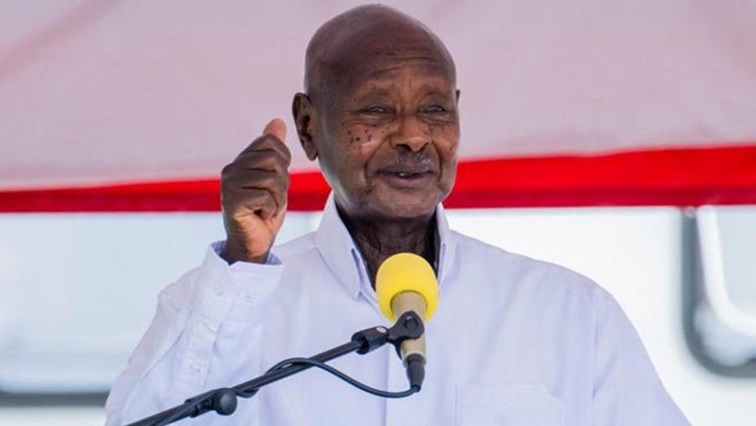
Ugandan President Yoweri Museveni is widely expected to extend his four decade rule in an election on Thursday after a campaign marred by violence and clouded by questions about who might eventually succeed him.
A former rebel leader who overthrew his predecessor in 1986, Museveni is now 81 and faces seven challengers.
He says another four years in power, his seventh term – would allow him to “protect the gains” of Uganda’s relative peace and stability.
The main opponent among his seven challengers is 43 year old pop star Bobi Wine, who won 35% of the vote in the last election in 2021 and has energised young voters angry about widespread unemployment and corruption.
Museveni has changed the constitution twice to remove age and term limits, and his dominance of Ugandan institutions means there is little prospect of an upset in the East African country of 46 million, political analysts say.
But the election, and any unrest that accompanies the voting, will be an important test of his political strength at a critical moment, four years after the United States denounced the last election as neither free nor fair.
Uganda is a significant geopolitical player in East Africa and has troops deployed in Somalia, South Sudan, the Democratic Republic of Congo and Equatorial Guinea as part of peacekeeping, anti-insurgency or military co-operation missions.
Ugandan President Yoweri Museveni is widely expected to extend his four decade rule in an election on Thursday after a campaign marred by violence and clouded by questions about who might eventually succeed him.
A former rebel leader who overthrew his predecessor in 1986, Museveni is now 81 and faces seven challengers.
He says another four years in power, his seventh term, would allow him to “protect the gains” of Uganda’s relative peace and stability.
The main opponent among his seven challengers is 43 year old pop star Bobi Wine, who won 35% of the vote in the last election in 2021 and has energised young voters angry about widespread unemployment and corruption.
Museveni has changed the constitution twice to remove age and term limits, and his dominance of Ugandan institutions means there is little prospect of an upset in the East African country of 46 million, political analysts say.
But the election, and any unrest that accompanies the voting, will be an important test of his political strength at a critical moment, four years after the United States denounced the last election as neither free nor fair.
Uganda is a significant geopolitical player in East Africa and has troops deployed in Somalia, South Sudan, the Democratic Republic of Congo and Equatorial Guinea as part of peacekeeping, anti-insurgency or military co-operation missions.
–Reuters–


