


Volunteers are going door-to-door to combat misinformation about Ebola in the area at the centre of the outbreak in the Democratic Republic of Congo (DRC) , the International Federation of Red Cross and Red Crescent Societies (IFRC) said this Friday.
The Bundibugyo strain of Ebola, for which there is no approved vaccine or treatment, was declared an emergency of international concern by the World Health Organisation (WHO) on Sunday.
The IFRC said it is working with communities in Mongbwalu, at the heart of the outbreak, to explain how people can protect themselves and when to seek care.
“Community reactions remain mixed. For some people the outbreak is very real and they are taking information on how to protect themselves,” Gabriela Arenas, the Regional Operations Co-ordinator for the IFRC Africa Region, told reporters via video link from Nairobi.
“For others, there’s still suspicion and misinformation claiming that Ebola is fabricated.”
Tensions have surfaced locally. Protesters set fire to tents for Ebola patients after DRC authorities refused to give them the dead body of a beloved local footballer suspected to have died in the outbreak. They wanted to bury him themselves and his family disputed that Ebola had killed him.
The episode demonstrated why building trust in communities is so important, Arenas said.
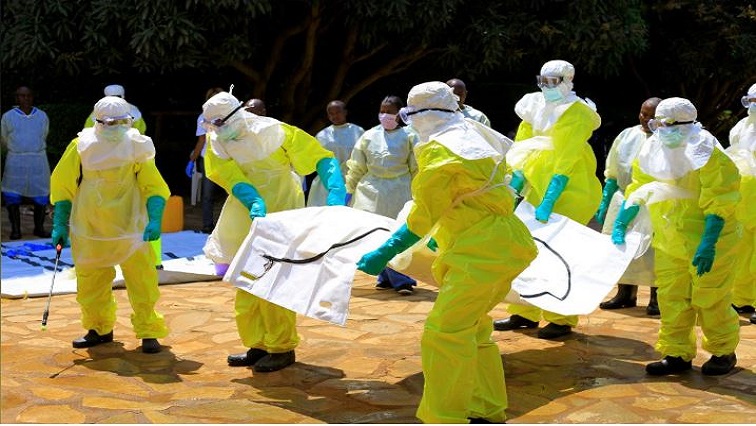
Bodies of Ebola victims are highly infectious after death, and unsafe burials where family members handle the body without proper protective equipment are a leading driver of transmission.
“When someone dies from Ebola, all of the fluids in their body that could be sweat, saliva, any fluids at all, contain usually quite a high viral load,” said Laura Archer, the IFRC Lead for Clinical Care and Public Health in Emergencies.
“So anyone who touches the body during carrying, washing, shrouding, moving is at extremely high risk of contracting the virus.”
The IFRC said its teams on the ground in DRC have already carried out 15 safe and dignified burials. Explaining to families, who are often scared and emotional, about the procedure of having a safe burial and funeral of their relatives was also important to limit spread.
“Ebola outbreaks start and end between communities, and this is why the local engagement remains so central to the response,” Arenas said, adding that rumors stem from fear and a lack of trusted information.
The IFRC has pre-positioned stocks of specialist thick body bags needed for Ebola cases. However, it says it will soon need to procure more stocks from abroad, which could be subject to complex logistic challenges.
–Reuters–


