


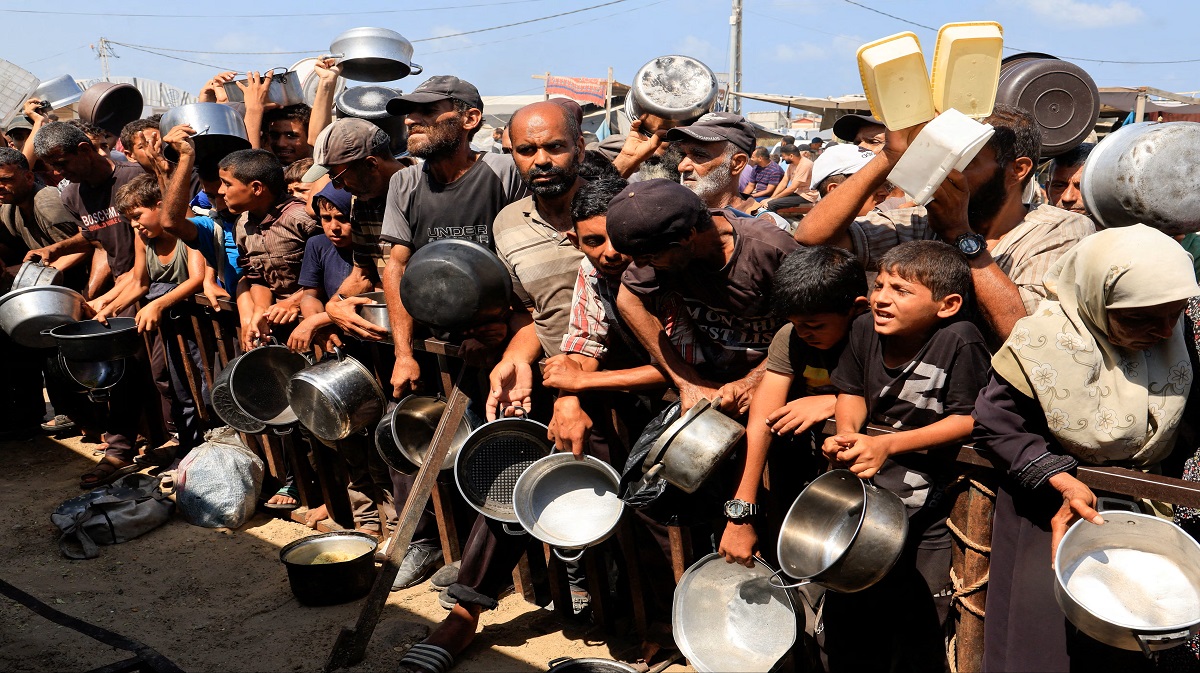
The WFP said this is especially true in the north, where famine was declared in August.
The agency says it has enough food stocks to feed the entire population of the enclave for three months if full access is granted by Israel. A week into the fragile ceasefire, WFP convoys have been delivering around 560 tonnes of food daily.
“The ceasefire deal has opened a narrow window of opportunity, and WFP is moving very quickly to scale up food assistance and reach families who have endured months of blockade, displacement and hunger,” said Abeer Etefa, WFP Senior Regional Communications Officer and Spokesperson for the Middle East, North Africa and Eastern Europe.
Etefa told journalists in Geneva that five food distribution points are now operational, mainly serving women and children, but the agency plans to expand to 145 locations across Gaza. “We’re still below what we need, but we’re getting there,” she said.
Aid agencies continue to stress that sustained access through multiple crossings is essential to reach those most in need. Currently, only two crossings are open, both in the south, leaving northern Gaza effectively cut off.
“Roads are blocked and destroyed. This is a huge limitation to transport,” Etefa added. Because of access and security challenges, no food distributions have yet been conducted in Gaza City, only nutrition support for children and pregnant or breastfeeding women.
UN aid co-ordination office Spokesperson Jens Laerke confirmed that crossings in the north remain closed “because the Israeli authorities have not opened them,” and highlighted the need for road repairs and clearance of unexploded ordnance.
UN Emergency Relief Co-ordinator Tom Fletcher, who joined the aid effort in Gaza on Friday, said the UN is implementing a 60-day plan to massively scale up humanitarian operations. He visited the Castle Bakery in Deir al Balah, one of nine bakeries WFP supports, now producing up to 300 000 loaves of pita bread daily.
According to WFP, 57 000 tonnes of food are pre-positioned in Egypt, Jordan, and Israel, with plans to scale up to 170 000 tonnes, enough to feed 1.6 million people for three months. “Beyond that, we need to maintain at least three months of stocks at all times,” Etefa said.
–UN/ChannelAfrica–


