


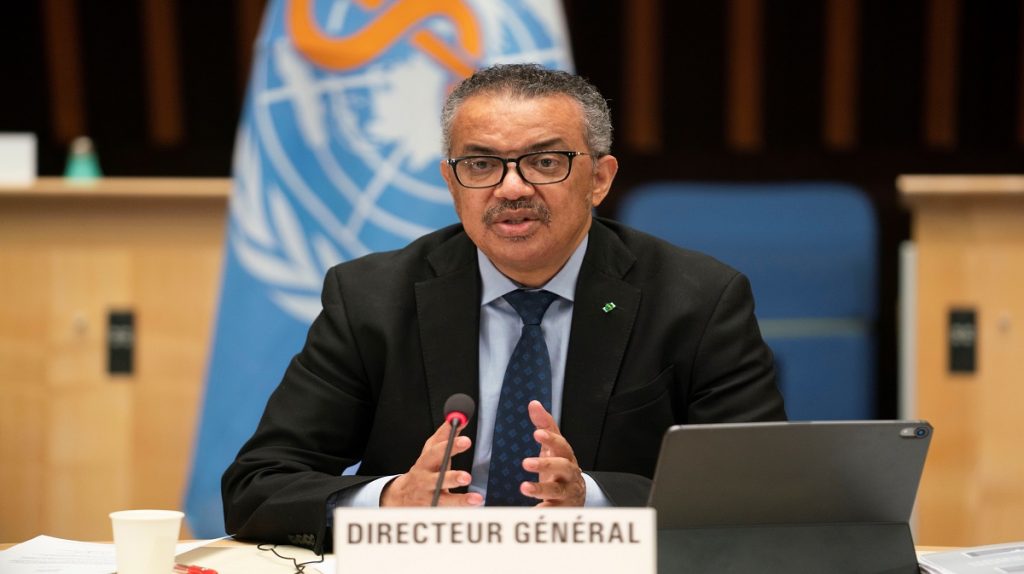
Announcing the appeal in Geneva on Tuesday, WHO Director‑General Tedros Adhanom Ghebreyesus said the funding request was a plea for solidarity with communities living through “conflict, displacement and disaster.”
“This appeal is a call to stand with people living through conflict, displacement and disaster, to give them not just services, but the confidence that the world has not turned its back on them,” he said.
The 2026 appeal aims to support WHO’s response to 36 emergencies, including 14 ‘grade 3’ crises, the organisation’s highest level of emergency classification. These include some of the world’s most severe and complex humanitarian situations, affecting hundreds of millions of people.
The launch comes at a time when global humanitarian and health financing is in decline, with allocations dropping to their lowest level in nearly a decade. Tedros warned that while needs are escalating, funding is shrinking.
“Around a quarter of a billion people are living through humanitarian crises that have stripped away safety, shelter and access to healthcare,” he said. “Meanwhile, global defence spending now exceeds $2.5 trillion a year.”
The WHO chief stressed that supporting frontline health systems is not merely an act of goodwill, but a critical investment in global stability. “It is not charity,” Tedros said. “It is a strategic investment in health and security. Access to healthcare restores dignity, stabilises communities and offers a pathway toward recovery.”
WHO, which leads international coordination of health responses in crises, works with more than 1 500 partners across 24 crisis settings, ensuring that national authorities and local responders remain at the centre of operations.
Resources will also be used to tackle growing outbreaks of cholera, Mpox, and other infectious diseases that continue to spread in fragile environments. The WHO warned that with global funding contracting sharply, humanitarian agencies are being forced to scale down or eliminate some services.
“With shrinking funding, WHO and other humanitarian partners have been forced to make difficult choices,” the organisation said. What remains funded are only the most critical interventions.
The agency emphasised the importance of predictable funding, saying early investment allows health teams to respond immediately when crises emerge, preventing outbreaks from escalating and reducing the long‑term human and financial costs of emergencies.
In 2025, support from the WHO’s emergency appeal helped reach 30 million people. With those resources, the organisation and its partners:
- delivered lifesaving vaccines to 5.3 million children
- enabled 53 million health consultations
- supported more than 8 000 health facilities
- deployed 1 370 mobile clinics into hard‑to‑reach communities
However, with global humanitarian funding falling below 2016 levels, WHO and its partners were only able to reach one-third of the 81 million people they had aimed to support last year.
The WHO says the world is facing converging threats, from violent conflict and climate‑driven disasters to economic instability and recurring disease outbreaks, all of which fuel unprecedented health needs.
“Renewed commitments and solidarity are urgently needed,” the agency said, warning that without increased support, millions may be left without access to lifesaving healthcare in 2026.
–ChannelAfrica–


