


Nearly 300 000 people die from drowning each year worldwide, with more than 90% of deaths occurring in low- and middle-income countries. Drowning remains among the 10 leading causes of death for children aged five to 14.
Many deaths occur in rivers, lakes, wells, domestic water storage containers and swimming pools.
WHO said climate change is increasing drowning risks as extreme weather events, including floods, storms and heatwaves, become more frequent. Research in the United Kingdom found that drowning deaths increase by 7.2% for every 1°C rise in temperature. The risk is also nearly five times higher on days above 25°C compared with days below 10°C.
WHO Director-General Dr Tedros Adhanom Ghebreyesus said most drowning deaths can be prevented. “Every drowning is a tragedy, and most are preventable,” Tedros said.
Tedros said the new package provides practical tools for governments. “The seven PROTECT strategies give countries practical, evidence-based approaches to prevent these tragedies, including making water transport safer, teaching school kids to swim, and preparing for floods,” Tedros said.
Tedros added: “Drowning prevention isn’t the job of one ministry; it belongs to everyone, and the lives it saves are the reward.”
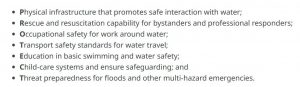
The PROTECT package translates WHO’s Global Strategy for Drowning Prevention into policy guidance across seven areas: safe physical infrastructure, rescue and resuscitation, occupational safety around water, transport safety standards, swimming and water safety education, child-care systems and flood preparedness.
The package is being launched in Ghana, where an estimated 1 100 people die from drowning each year, equivalent to around three deaths daily. Children and young adults are disproportionately affected.
WHO said the launch recognises Ghana’s growing political commitment to water safety and highlights the need for other governments to adopt evidence-based policies.
Bloomberg Philanthropies Public Health Programme Lead Dr Kelly Henning said the framework will support progress already being made by governments. “This framework will save lives while building on the progress governments around the world are making to prevent drowning deaths in their countries,” Henning said.
Henning said Bloomberg Philanthropies has worked with governments worldwide to implement proven drowning prevention strategies and will continue supporting WHO and local authorities.
This year’s World Drowning Prevention Day theme, “Unite to turn the tide”, calls for coordinated action across governments, sectors and communities.
–WHO/ChannelAfrica–


