


The WMO said July was the second-warmest July recorded globally, according to the European Union’s Copernicus Climate Change Service.
Average surface air temperatures were 1.47°C above the estimated pre-industrial level, while sea-surface temperatures were the highest recorded for July.
WMO Spokesperson Clare Nullis said meteorological services, emergency teams and health professionals remain under intense pressure as heatwaves and other extreme conditions continue in August. “We’re also seeing extreme rainfall, tropical cyclones. So, we’re not in holiday mode at all,” Nullis said.
Western Europe recorded the hottest combined June and July period on record. Switzerland and France are experiencing a fourth heatwave of the summer, while drought is affecting agriculture, harvests, transport, energy production and river levels. “Intense drought is really biting,” Nullis said.
WMO Head of Climate Information John Kennedy said low rainfall and high temperatures have contributed to drought, low river levels and increased wildfire risks. Major European rivers, including the Seine, Rhine and Danube, have recorded low flows.
Japan, the Republic of Korea and parts of Asia, the Middle East and Latin America also experienced exceptional or record-breaking temperatures.
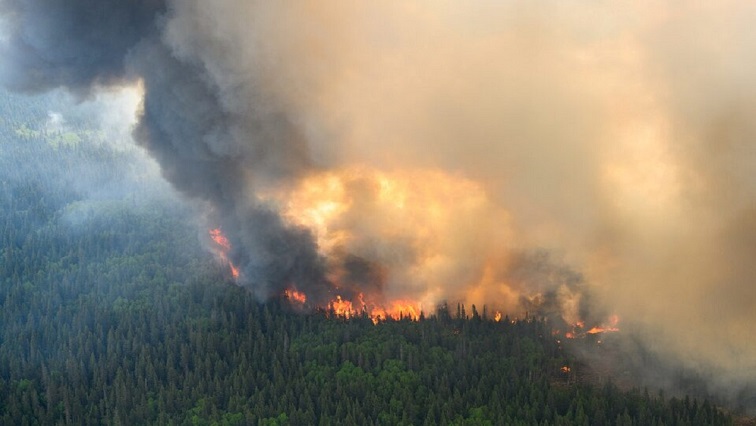
Wildfire activity has intensified across Western Europe. France is on track for one of the most extreme wildfire years recorded during the past 24 years, while Spain’s fire emissions are well above average.
In North America, fires continue to burn in the western United States. Canada had 591 active fires as of Monday, with 43 classified as out of control.
Extreme rainfall and flooding are also affecting parts of West Africa. WMO has warned of heavy rain, flash floods and landslides in parts of India, Pakistan, Nepal, Bangladesh, Bhutan, Myanmar and Southeast Asia.
China carried out mass evacuations before Typhoon Dolphin, the 13th storm of the season, made landfall.
Kennedy said the extreme conditions reflect the combined effects of long-term global warming and persistent high- and low-pressure systems across the northern hemisphere.
With El Niño established in the Pacific, WMO expects global temperatures to rise further. The global temperature peak typically follows the El Niño peak, which usually occurs between November and January.
Nullis said WMO and member countries are working to improve forecasts and warning systems. “The Early Warnings for All initiative remains the overriding priority,” Nullis said.
–UN/ChannelAfrica–


