


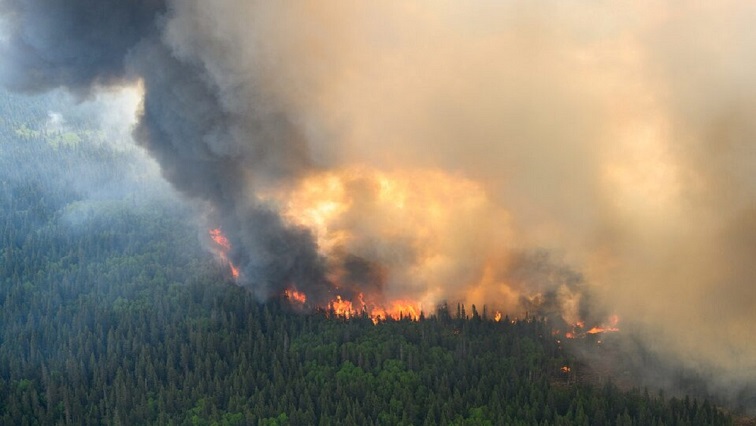
According to the United Nations (UN) weather agency’s latest Global Seasonal Climate Update, El Niño has now developed in the tropical Pacific and is expected to strengthen rapidly between July and September. The phenomenon is forecast to bring additional warming to global temperatures, increasing the likelihood of climate extremes across several regions.
“El Niño will also give an extra boost to global temperatures,” said WMO scientist Alvaro Silva. “We know that during El Niño years, global temperatures normally reach record levels.”
The WMO said there is high confidence that strong El Niño conditions will emerge during the second half of the year, supported by significant warming of ocean temperatures across the central and eastern equatorial Pacific. Forecast models indicate that sea-surface temperature anomalies could exceed 2°C in key monitored regions.
The warning comes as many parts of the world are already experiencing unusually high temperatures. WMO Spokesperson Clare Nullis noted that Europe recorded several heat records during June, including a new national temperature record of 41.7°C in Germany.
The agency also highlighted a prolonged and potentially dangerous heatwave affecting parts of the central and eastern United States, with elevated temperatures expected to continue through the Independence Day holiday period.
Beyond heatwaves, El Niño is expected to influence rainfall patterns across multiple regions. Drier-than-average conditions are forecast for Central America, the Caribbean and parts of North and South America. Parts of Indonesia and Southeast Asia could also experience below-normal rainfall during the monsoon season.
In contrast, wetter-than-normal conditions are anticipated in East Africa between September and December. The WMO warned that the region could face an increased risk of flooding, particularly if El Niño coincides with a positive Indian Ocean Dipole event.
The organisation said the outlook has prompted an unprecedented mobilisation of meteorological agencies and climate centres around the world to help governments prepare for potential impacts. “We have a window to act for preparedness and early action,” Silva said. “This window is narrowing in some regions.”
He noted that countries expecting drought conditions should prioritise water management for agriculture, energy production and other essential activities.
El Niño is one phase of the El Niño-Southern Oscillation, one of the most powerful natural climate drivers. It is characterised by warmer-than-average sea-surface temperatures in the central and eastern Pacific Ocean and typically occurs every two to seven years.
Although El Niño events generally last between nine and 12 months, their effects can vary depending on their intensity, timing and interaction with other climate systems.
The WMO stressed that stronger El Niño events increase the likelihood of extreme weather and climate impacts worldwide, adding further pressure to a warming climate already influenced by human activities.
The agency urged governments to use the forecasts to strengthen preparedness measures, protect livelihoods and reduce risks to vulnerable communities in the months ahead.
–UN/ChannelAfrica–


