

The result gives Hichilema a comfortable victory over National Reconciliation Party for Unity and Progress candidate Brian Mundubile, who had earlier claimed victory and alleged voting irregularities, although no evidence was presented to support the claims.
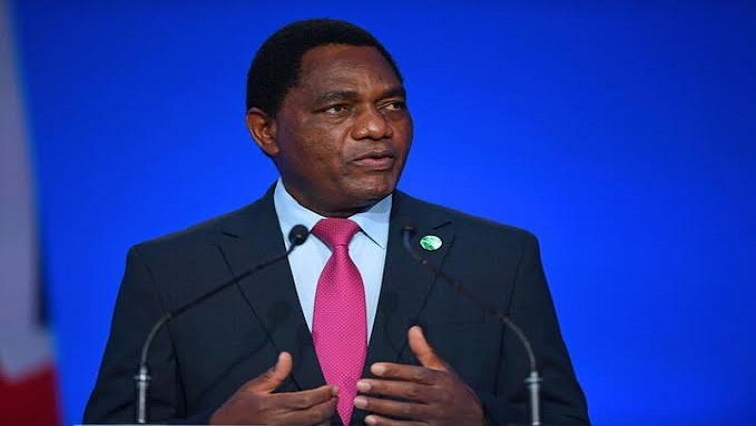
Following the announcement of the results, Hichilema described the election as a demonstration of Zambia’s democratic credentials.
Hichilema said the election had demonstrated that Zambia is a country of peace, law and order, and a democratic nation that settles its differences at the ballot box rather than through other means.
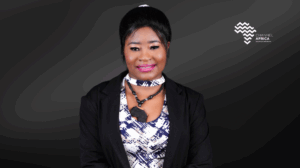
Despite concerns raised during the campaign, Political Analyst Dr Shingai Mutizwa-Mangiza said the scale of Hichilema’s victory could make any legal challenge difficult. “With 60% of the vote, that can be described as a very comfortable lead,” Mutizwa-Mangiza said.
Mutizwa-Mangiza noted that Zambia’s Electoral Act requires a candidate to secure more than 50% of the vote to win outright, a threshold Hichilema exceeded comfortably.
According to Mutizwa-Mangiza, any successful challenge would require substantial evidence of widespread irregularities capable of affecting the outcome. “There would have had to be some very substantial and wide-ranging reports of serious irregularities,” Mutizwa-Mangiza said.
The election was not without controversy. The Electoral Commission of Zambia temporarily suspended vote counting in some areas after attacks on election officials and the theft of ballot papers. Opposition parties and civil society organisations also raised concerns about restrictions on meetings and campaign activities ahead of the vote.
However, Mutizwa-Mangiza said international and regional observer missions had not raised major concerns about the overall conduct of the election. “Broadly speaking, the election has been relatively peaceful,” Mutizwa-Mangiza said.
Mutizwa-Mangiza added that while isolated incidents had been reported, there was currently no evidence suggesting the result should be overturned.
Looking ahead, Mutizwa-Mangiza said Hichilema’s second term will be judged largely on the government’s ability to translate economic improvements into tangible benefits for ordinary citizens.
When Hichilema took office in 2021, Zambia was facing a severe debt crisis, high inflation and economic instability. Mutizwa-Mangiza said progress had been made through debt restructuring efforts, policy reforms and renewed investor confidence.
However, significant challenges remain. “Approximately 70% of Zambia’s population lives on just over $3 a day,” Mutizwa-Mangiza said.
Mutizwa-Mangiza said unemployment, electricity shortages and the cost of living remain pressing concerns. “At the end of the day, it’s about the tangible metrics for the electorate,” Mutizwa-Mangiza said.
Mutizwa-Mangiza said the key challenge for Hichilema’s second term will be ensuring that economic gains are reflected in improved living standards, job creation and more reliable public services for ordinary Zambians.
–ChannelAfrica–


